

When to Replace a Timing Belt
on a Used Car: A Complete Guide
When you are considering purchasing a pre-owned vehicle, understanding its maintenance history is crucial. One of the most critical, yet often overlooked, components is the timing belt. This essential part synchronizes the engine's most important moving parts, and its failure can lead to catastrophic and expensive engine damage. Knowing when to replace the timing belt on a used car is not just about preventative maintenance; it is about protecting your investment and avoiding unexpected, costly repairs down the road. For many buyers browsing our used inventory, the condition of the timing belt is a key factor in their decision. This guide will walk you through everything you need to know about timing belts, from identifying replacement intervals to recognizing warning signs, helping you make a more informed and confident purchase.
Understanding the timing belt's status gives you significant peace of mind and bargaining power. If the belt is due for a change, you can factor that cost into your purchase decision. If it has been recently replaced, you can drive away confident that a major service item is already taken care of. Our team is always transparent about the service history of our vehicles. Feel free to contact us with any questions about a specific car, truck, or SUV you are interested in.
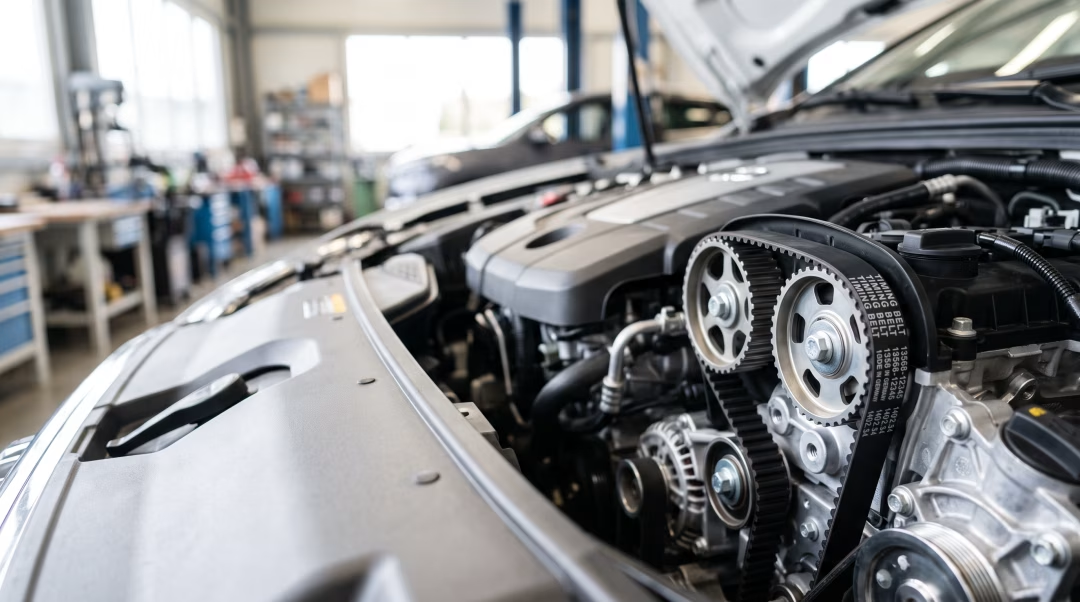
The Definitive Guide to Used Car Timing Belt Replacement
Diving deeper into the mechanics of a used car, the timing belt stands out as a component that demands respect and attention. Unlike a battery or tires, which often give clear and gradual signs of wear, a timing belt can fail without much warning. That is why proactive knowledge is your best defense. This comprehensive section will cover what a timing belt does, the difference between a belt and a chain, manufacturer recommendations, warning signs, and the financial implications of this vital service.
What is a Timing Belt and What Does It Do?
At its core, a timing belt is a ribbed belt made of a durable rubber composite that connects the engine's crankshaft to the camshaft(s). Its one job is to ensure these components rotate in perfect synchronization. The crankshaft converts the up-and-down motion of the pistons into rotational force, while the camshafts open and close the engine's valves to let the air-fuel mixture in and exhaust gases out. If this timing is off by even a fraction of a second, the pistons can collide with the valves, causing severe internal engine damage. Think of it as the conductor of an orchestra; if the conductor's timing is off, the entire performance falls into chaos.
Timing Belt vs. Timing Chain: What's the Difference?
As you explore different vehicles, like the diverse selection of used sedans in Winston Salem, NC, you will find that some use a timing belt while others use a timing chain. They perform the same function, but their construction and maintenance needs differ significantly.
- Timing Belt: Made of a rubber compound, it operates quietly and is less expensive to produce. However, it is a wear-and-tear item with a finite lifespan and requires periodic replacement as part of your vehicle's preventive car maintenance schedule.
- Timing Chain: Resembling a bicycle chain, this component is made of metal and is lubricated by engine oil. It is designed to last the life of the engine and typically does not have a scheduled replacement interval. While more durable, they can stretch over time, and replacing a timing chain and its related components (guides, tensioners) can be a more complex and expensive job than replacing a belt.
When buying a used car, it is essential to know which system the vehicle uses. A quick search of the year, make, and model will usually provide the answer.
Manufacturer's Recommended Replacement Intervals
Every vehicle manufacturer that uses a timing belt specifies a recommended replacement interval based on both mileage and time. This is because the rubber material degrades not only from use but also from age, heat, and exposure to fluids. The interval can vary widely, but a general range is typically between 60,000 and 100,000 miles, or between 7 and 10 years, whichever comes first.
For example, if you are looking at a 9-year-old used SUV with only 50,000 miles, it may still be due for a timing belt replacement based on its age. Always consult the owner's manual for the specific vehicle you are considering. If the manual is not available, our service experts can look up the factory-recommended schedule for you. If you have questions about a vehicle's history, do not hesitate to ask one of our team members when you schedule a test drive.
Warning Signs of a Failing Timing Belt
While a timing belt can fail suddenly, there are sometimes subtle warning signs that indicate it is nearing the end of its service life. Being aware of these can help you avoid a catastrophic failure.
- Ticking or Whirring Noise: A consistent ticking sound coming from the engine compartment can indicate the belt is wearing down or that a tensioner or pulley is failing.
- Engine Misfires: If the belt has stretched or slipped, the camshaft and crankshaft timing can be slightly off, leading to engine misfires, rough idling, or difficulty starting.
- Visible Wear and Tear: A visual inspection (if the belt is accessible) may reveal cracks, fraying, glazing (a shiny appearance), or teeth that have broken off. Any visible damage means replacement is immediately necessary.
- Oil or Coolant Leaks: Leaks from the front of the engine, particularly from the water pump or camshaft seals, can contaminate the timing belt, accelerating its degradation and leading to premature failure.
If you notice any of these signs in a vehicle you are considering or one you already own, it is imperative to have it inspected by a professional. You can always schedule service with our trained technicians for a thorough diagnosis.
The Consequences of a Broken Timing Belt: Interference vs. Non-Interference Engines
The severity of a timing belt failure depends on the engine's design. Engines are classified as either "interference" or "non-interference."
In an interference engine, the valves and pistons occupy the same space in the cylinder, but at different times. If the timing belt breaks, the camshaft stops turning, leaving some valves in the open position. The crankshaft, however, continues to spin momentarily due to momentum, causing the pistons to smash into the open valves. This results in bent valves, damaged pistons, and potentially a ruined cylinder head—a repair that can often cost more than the value of the used car itself.
In a non-interference engine, there is enough clearance between the valves and pistons that they will not collide even if the timing is lost. If the belt breaks on this type of engine, the car will simply stall, and while you will still need a tow and a timing belt replacement, you will likely avoid catastrophic internal engine damage.
Most modern engines are of the interference design to maximize efficiency and performance. Therefore, adhering to the replacement schedule is not just a recommendation; it is essential insurance against a massive repair bill.
What to Expect During a Timing Belt Replacement Service
Replacing a timing belt is a labor-intensive job. It requires removing numerous components to access the belt, which is typically hidden behind protective covers. Because of the significant labor involved, it is highly recommended to replace other related components at the same time. This is often sold as a "timing belt kit."
A complete timing belt service should generally include:
- The new timing belt itself.
- The water pump (often driven by the timing belt).
- The timing belt tensioner and idler pulleys.
- Camshaft and crankshaft seals, if they show any signs of leaking.
The water pump and pulleys have similar service lives to the belt. Replacing them simultaneously saves you from paying for the same labor-intensive disassembly process again in the near future if one of those parts fails. When inquiring about a used car's service history, ask if these related components were also replaced. A receipt showing only a belt replacement is less reassuring than one for a complete kit installation.
Timing Belt Frequently Asked Questions
How can I find out if a used car's timing belt has been replaced?
The best way is through detailed service records from the previous owner. Look for a receipt from a reputable shop that specifies the date, mileage, and parts replaced (ideally a full kit). Sometimes, a sticker is placed in the engine bay indicating the date and mileage of the last replacement. If no records are available, it is safest to assume it has not been done and budget for the service.
How much does it cost to replace a timing belt?
The cost varies significantly depending on the vehicle's make and model, engine complexity (e.g., a V6 vs. a 4-cylinder), and local labor rates. The price can range from a few hundred to over a thousand dollars. The majority of the cost is labor, which is why replacing the water pump and other components at the same time is cost-effective.
Can I replace a timing belt myself?
This is considered an advanced DIY job. It requires specialized tools, precision, and a thorough understanding of engine mechanics. An error in aligning the timing marks can lead to poor performance or the very engine damage you are trying to prevent. For most owners, we strongly recommend having this critical service performed by our professional technicians at our used car service center.
Does a timing belt affect a car's trade-in value?
Yes, it can. A vehicle that is near or past its timing belt service interval may have its value reduced to account for the upcoming repair cost. Conversely, if you have recently had the service performed and have records to prove it, this can be a positive selling point. You can get an estimate of your vehicle's worth by using our value my trade tool online.
Do all cars have a timing belt?
No. Many vehicles, especially certain models of used trucks and larger SUVs, use a timing chain instead, which typically does not require scheduled replacement. It is important to research the specific year, make, and model of the car you are interested in to determine whether it has a belt or a chain. Our knowledgeable staff can provide this information for any vehicle on our lot.
