
What Your Check Engine Light Means
and What to Do About It
That sudden, unexpected glow on your dashboard can be unsettling. The check engine light, officially known as the Malfunction Indicator Lamp (MIL), is your vehicle's way of telling you that its onboard computer system has detected a problem. While it can trigger a moment of panic, it does not always signal a catastrophic failure. The issue could be as simple as a loose gas cap or something more complex requiring professional attention. The most important thing is not to ignore it. This light is a vital part of your car's diagnostic system, designed to alert you to potential issues that could affect your fuel economy, emissions, or even the long term health of your engine. Understanding what this warning means is the first step toward getting your vehicle back in top condition. Our team is here to help you decipher the message and find the right solution.
Whether the light is steady or flashing, a prompt and accurate diagnosis is key to preventing minor issues from becoming major, expensive repairs. At our service center in Winston Salem, our skilled technicians use advanced diagnostic equipment to pinpoint the exact cause of the alert. We are committed to providing clear explanations and transparent service, helping you make informed decisions about your vehicle's care. Do not let a warning light keep you off the road. Let us provide the peace of mind that comes with expert service.
A Deeper Dive into the Check Engine Light
The check engine light is one of the most misunderstood indicators on a vehicle's dashboard. It is connected to your car's Onboard Diagnostics (OBD-II) system, a sophisticated computer network that monitors hundreds of components and sensors throughout your engine and emissions system. When this system detects a reading that is outside of normal parameters, it stores a Diagnostic Trouble Code (DTC) in its memory and illuminates the light to alert you, the driver. This system is standard on all vehicles manufactured for sale in the United States since 1996.
The purpose of the light is not just to warn of engine trouble but also to ensure the vehicle is operating efficiently and within federal emissions standards. An illuminated check engine light is often the first sign of a problem that could be silently increasing your fuel consumption or releasing harmful pollutants into the atmosphere. Addressing the root cause promptly is not just good for your car; it is good for your wallet and the environment.
Steady vs. Flashing: What is the Difference?
Understanding the behavior of the check engine light is critical for determining your immediate course of action. There are two primary ways the light will appear, and they signify very different levels of urgency.
- A Steady or Solid Light: This is the most common scenario. A steady check engine light indicates that the OBD-II system has detected a non-emergency fault. While the problem should be addressed as soon as is practical, it typically does not require you to pull over immediately. You can usually continue driving, but you should make plans to have the vehicle inspected. You might notice a slight decrease in performance or fuel economy, but often there are no other noticeable symptoms.
- A Flashing or Blinking Light: This is a much more serious warning. A flashing check engine light indicates a severe problem, most often a significant engine misfire. This condition can cause unburnt fuel to be dumped into the exhaust system, which can rapidly overheat and destroy the catalytic converter, a very expensive component. If your check engine light is flashing, you should reduce your speed, minimize your load on the engine, and find a safe place to pull over as soon as possible. Driving with a flashing light can lead to severe and costly damage. We recommend having your vehicle towed to a professional service center like ours for engine diagnostics.
Common Reasons Your Check Engine Light Is On
While the light can indicate hundreds of potential issues, a few common culprits are responsible for the majority of cases. Here are some of the most frequent problems that trigger a check engine light:
- Loose or Faulty Gas Cap: This is one of the simplest and most common causes. The gas cap is a crucial part of the vehicle's evaporative emission system (EVAP), which prevents gasoline vapors from escaping into the atmosphere. A loose, damaged, or missing cap can break the system's seal, triggering the light. Always try tightening your gas cap first; it may resolve the issue after a few drive cycles.
- Failing Oxygen (O2) Sensor: An O2 sensor measures the amount of unburnt oxygen in your exhaust system. This data helps the engine's computer determine the optimal air-fuel ratio for maximum efficiency. When a sensor fails, it can send inaccurate data, leading to decreased fuel economy and increased emissions. Over time, a bad O2 sensor can also damage spark plugs and the catalytic converter.
- Worn Spark Plugs or Faulty Ignition Coils: Spark plugs ignite the air-fuel mixture in the combustion chamber. Ignition coils provide the high voltage electricity the spark plugs need. If either of these components is worn out or failing, it can cause an engine misfire, which will immediately trigger the check engine light (and often cause it to flash).
- Catalytic Converter Failure: The catalytic converter transforms harmful exhaust gases like carbon monoxide into less harmful substances. It is a critical emissions control device. Failure is often caused by another underlying issue, such as a bad O2 sensor or engine misfires that go unaddressed. A clogged or failing converter will reduce engine performance and fuel efficiency and is a costly repair.
- Mass Airflow (MAF) Sensor Issues: The MAF sensor measures the amount of air entering the engine, another key data point for managing the air-fuel mixture. A dirty or failing MAF sensor can cause rough idling, stalling, and poor acceleration. Cleaning the sensor can sometimes resolve the issue, but replacement is often necessary.
- Aftermarket Alarms and Accessories: Improperly installed aftermarket parts, especially remote starters and alarm systems, can sometimes interfere with the vehicle's computer system and cause a false check engine light.
Why Professional Diagnosis Matters
Many auto parts stores offer free code reading services. While this can give you a general idea of the problem by providing the DTC, it is not a complete diagnosis. A trouble code, such as "P0420 - Catalyst System Efficiency Below Threshold," tells you what the system is seeing, but it does not tell you why. The P0420 code could be caused by a failing catalytic converter, but it could also be triggered by a faulty O2 sensor, an exhaust leak, or an engine performance issue. Simply replacing the converter without diagnosing the root cause can lead to a repeat failure and wasted money.
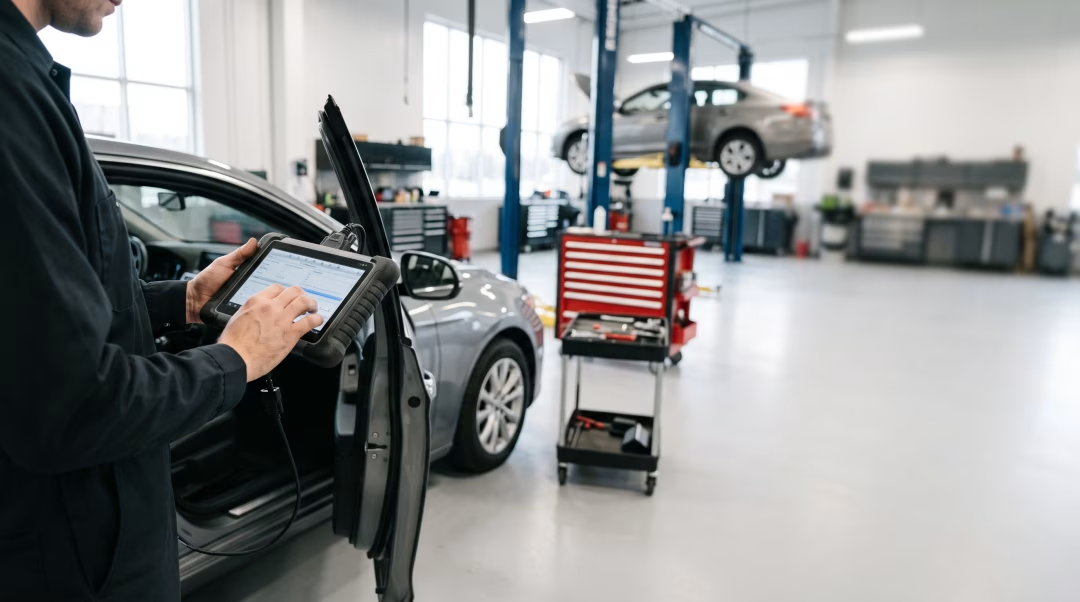
Our technicians use professional-grade scan tools that provide much more than just a code. They can view live data streams from sensors, perform system tests, and access manufacturer specific information. This comprehensive approach allows them to perform an accurate check engine light diagnosis, ensuring the correct part is replaced the first time. If you are experiencing a check engine light, we encourage you to schedule a service appointment with our expert team.
Frequently Asked Questions About the Check Engine Light
Can a loose gas cap really cause the check engine light?
Yes, absolutely. The gas cap is a vital part of the Evaporative Emission Control (EVAP) system. This system is pressurized to prevent fuel vapors from escaping. If the cap is loose, cracked, or missing, the system loses pressure, which the onboard computer detects as a leak, triggering the check engine light.
What is the difference between a solid and a flashing check engine light?
A solid, or steady, light indicates a non-critical fault has been detected. You should have it checked soon, but you can generally continue driving. A flashing light signals a severe issue, typically a major engine misfire that could quickly damage your catalytic converter. If the light is flashing, you should pull over as soon as it is safe and have your vehicle towed for service.
How much does it cost to diagnose a check engine light?
The cost for a diagnostic service can vary. It typically involves a set fee for our technicians to connect professional scan tools and perform preliminary tests to identify the Diagnostic Trouble Code (DTC) and determine the likely cause. We always provide a clear estimate for the diagnostic process and any subsequent repairs before any work begins. Please contact our service department for current pricing.
Will my check engine light go off by itself?
Sometimes, it might. If the issue was temporary, such as a loose gas cap that you have since tightened or a momentary sensor glitch, the light may turn off after several driving cycles. However, if the light remains on, it indicates a persistent problem that requires professional diagnosis and repair. Ignoring it can lead to more significant issues down the road.
Can I pass a North Carolina state inspection with the check engine light on?
No. In North Carolina, an illuminated check engine light is an automatic failure of the emissions portion of the annual safety and emissions inspection for vehicles model year 1996 and newer. The underlying issue must be repaired and the light must be off for the vehicle to pass inspection. You can learn more about North Carolina emissions inspection rules on our blog.
