

Expert Tire Installation
in Winston Salem, NC
Your vehicle's tires are the only point of contact between you and the road, making their condition and proper installation critically important for your safety, vehicle performance, and fuel efficiency. At our service center in Winston Salem, NC, we provide professional tire installation services you can trust. Our experienced technicians understand that mounting and balancing a tire is a precision job that goes beyond simply putting rubber on a wheel. We use state of the art equipment to ensure each new tire is seated correctly, inflated to the manufacturer's exact specifications, and perfectly balanced to provide a smooth, vibration free ride. Whether you have purchased tires from us or another retailer, you can count on our team for meticulous service that protects your investment and keeps you driving confidently on the roads of North Carolina. Let us be your go to destination for all your tire needs.
Choosing a professional for your tire installation is a crucial decision for your vehicle's health and your safety. Our dedicated service team has the expertise to handle all types of vehicles, from compact sedans to heavy duty trucks. We take pride in our thorough process, which includes a comprehensive inspection of your wheels and TPMS sensors. Don't leave this vital service to chance. Trust the experts who are committed to quality and precision for every car, truck, and SUV that enters our service bays here in Winston Salem.
The Critical Role of Professional Tire Installation
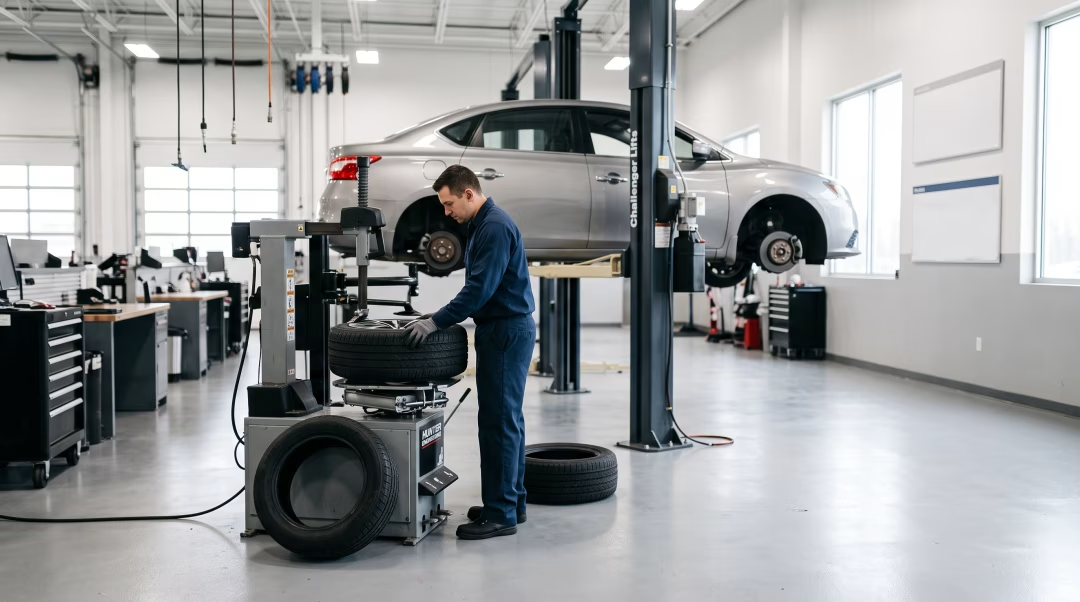
Tire installation might seem straightforward, but it is a highly technical process that has a direct impact on your vehicle’s handling, safety, and the lifespan of your new tires. Improper installation can lead to a host of problems, including premature or uneven tire wear, poor handling characteristics, excessive road noise, and even dangerous situations like a tire separating from the wheel. When you need new tires mounted in Winston Salem, choosing a facility with certified technicians and modern equipment is non-negotiable. Our team at our used car service center understands the nuances that make for a perfect installation, ensuring your peace of mind every time you get behind the wheel.
Our commitment to excellence begins the moment your vehicle arrives. We don't just swap out the old rubber for new. We perform a detailed, multi-step process designed to optimize performance and safety. This meticulous approach is what sets us apart and why drivers from across the Piedmont Triad, including Greensboro and High Point, trust us with their vehicles.
Our Comprehensive Tire Mounting and Balancing Process
To give you a better understanding of the quality and care we put into our work, here is a detailed look at our tire installation process:
- Vehicle and Wheel Inspection: Before any work begins, our technician will raise your vehicle on a professional lift and remove the wheels. Each wheel is inspected for any signs of damage, such as cracks, bends, or corrosion, that could affect the tire's seal or the safety of the installation.
- Old Tire Removal: We use specialized tire changing machines that carefully break the bead of the old tire and remove it from the wheel without scratching or damaging the rim. The old valve stem is also removed and discarded.
- Wheel Preparation and New Valve Stem: The mounting surface of the wheel is thoroughly cleaned to remove any rust, dirt, or old rubber residue. This ensures an airtight seal for the new tire. A new valve stem is then installed. For vehicles with a Tire Pressure Monitoring System (TPMS), we inspect the sensor and service it as needed.
- New Tire Mounting: The new tire is carefully mounted onto the wheel. Our technicians apply a special lubricant to the tire bead and wheel rim to facilitate a smooth installation and prevent any tearing or damage to the tire.
- Proper Inflation: The tire is inflated to the precise pressure recommended by your vehicle’s manufacturer, which can be found on the sticker inside the driver's side doorjamb. We never rely on the pressure rating molded into the tire's sidewall, as that is the maximum pressure, not the recommended operating pressure.
- Computerized Wheel Balancing: This is one of the most critical steps. Each wheel and tire assembly is placed on a high speed dynamic balancing machine. This machine spins the wheel to identify any weight imbalances and tells our technician exactly where to place small, counteracting weights on the rim. A properly balanced wheel prevents vibrations at highway speeds, reduces tire wear, and protects your vehicle's suspension components.
- Final Installation and Torquing: The newly balanced assemblies are installed back onto your vehicle. We use a calibrated torque wrench to tighten the lug nuts to the manufacturer's specified torque setting, following a star pattern to ensure the wheel is seated evenly against the hub. This prevents warped brake rotors and ensures the wheel will not come loose.
- TPMS Reset: If your vehicle is equipped with a TPMS, we will perform the necessary relearn procedure to ensure the system recognizes the new sensors or their positions, preventing a persistent warning light on your dashboard.
Do You Need New Tires? Watch for These Warning Signs
Not sure if it is time for a new set of tires? Regular inspections can help you identify potential issues before they become serious safety hazards. Here are some key indicators that your tires may need to be replaced:
- Low Tread Depth: The most common reason for tire replacement. You can use the "penny test" — place a penny with Lincoln's head upside down in a tread groove. If you can see the top of his head, your tread is worn below 2/32 of an inch and it is time for new tires.
- Visible Tread Wear Indicators: Most tires have wear bars molded into the tread. These are small, raised bars of rubber that sit low in the grooves. As the tire wears down, these bars will become flush with the tread surface, indicating it is time for a replacement.
- Cracks or Cuts in the Sidewall: Inspect the sidewalls for any cracks, cuts, or grooves. While minor cracking may be cosmetic, deep cracks can indicate dry rot and a risk of tire failure.
- Bulges or Blisters: A bulge or blister on the sidewall is a weak spot where the tire's internal structure has been compromised. This is a serious safety hazard that could lead to a sudden blowout and requires immediate tire replacement.
- Excessive Vibration: While vibration can be caused by misaligned or unbalanced tires, it can also be a sign of an internal tire problem. If your vehicle is vibrating, it is best to have it inspected by a professional. You can schedule service with us online.
Frequently Asked Questions About Tire Installation
How often should I replace my tires?
Most tire manufacturers recommend replacing your tires every six to ten years, regardless of tread wear. However, the most important factor is tread depth. In North Carolina, tires must be replaced when the tread wears down to 2/32 of an inch. Driving habits, road conditions, and proper maintenance like rotations and alignments also play a significant role in a tire's lifespan.
What is the difference between wheel balancing and alignment?
Wheel balancing and alignment are two distinct but equally important services. Balancing, which is part of our installation process, involves correcting weight imbalances in the tire and wheel assembly to prevent vibration. A wheel alignment, on the other hand, involves adjusting the angles of your vehicle's suspension to ensure the tires make contact with the road correctly, which prevents uneven tire wear and ensures straight tracking.
Can I bring my own tires for you to install?
Absolutely. While we offer a great selection of tires for sale, we are happy to provide our expert installation services for tires you have purchased elsewhere. Our technicians will give your tires the same meticulous care and attention to detail, ensuring they are mounted, balanced, and installed safely on your vehicle.
How long does professional tire installation take?
For a standard installation of four tires, you can typically expect the process to take about 45 minutes to an hour. This includes removing the old tires, mounting and balancing the new ones, and performing the final torque and TPMS reset. We strive to provide efficient service to get you back on the road safely and quickly.
Do you service the Tire Pressure Monitoring System (TPMS)?
Yes, we do. Our technicians are trained to handle all aspects of your vehicle's TPMS during a tire installation. This includes inspecting the sensors for damage or corrosion, replacing service kits (seals, nuts, and valve cores), and performing the necessary relearn procedure to ensure the system functions correctly after the new tires are installed. This is a critical part of our comprehensive TPMS service.
