
Expert Engine Diagnostics
in Winston Salem NC
That glowing amber light on your dashboard can be a source of major stress. The check engine light is your vehicle's way of telling you that something needs attention, but it does not specify what. Ignoring it can lead to more significant and costly repairs down the road. At our service center in Winston Salem, NC, we take the guesswork out of the equation with our professional engine diagnostic services. Our skilled technicians utilize state of the art diagnostic equipment to interface directly with your car's onboard computer system. We can accurately pinpoint the source of the issue, whether it is a simple fix like a loose gas cap or a more complex sensor problem. By understanding the precise diagnostic trouble code, we provide you with a clear explanation and an effective repair plan to get you back on the road safely and with confidence. Trust us to be your go to source for check engine light diagnosis in the Piedmont Triad.
Choosing the right team for your automotive service needs is crucial for your vehicle's health and your peace of mind. Our commitment at our Winston Salem service center goes beyond just reading a code. We believe in providing transparent, honest, and thorough diagnostic services. The technicians on our team are experienced professionals who understand the intricate systems of modern vehicles. When you bring your car to us, you are not just getting a scan; you are getting a comprehensive analysis from a team dedicated to quality and customer satisfaction. Schedule your service with us today.
Decoding Your Vehicle's Warning Signs
Your car is a complex machine with an advanced network of computers and sensors constantly monitoring its performance. The check engine light, officially known as the Malfunction Indicator Lamp (MIL), is the most visible part of your car's Onboard Diagnostics (OBD-II) system. When this system detects a problem in the engine or transmission that could affect your vehicle's emissions, it stores a Diagnostic Trouble Code (DTC) and illuminates the light on your dash. While it is tempting to hope the light will go away on its own, this is rarely the case. An illuminated MIL is a clear signal that your car needs a professional evaluation to prevent minor issues from escalating.
A solid check engine light typically indicates a non-emergency issue that should be inspected soon. A flashing check engine light, however, signals a more severe problem, such as an engine misfire, that could cause serious damage to expensive components like the catalytic converter. If your check engine light is flashing, it is highly recommended to reduce your speed and have the vehicle inspected as soon as possible. Our team in Winston Salem has the expertise to handle both scenarios, providing you with the accurate information needed to make an informed decision about your auto repairs.
Our Comprehensive Engine Diagnostic Process
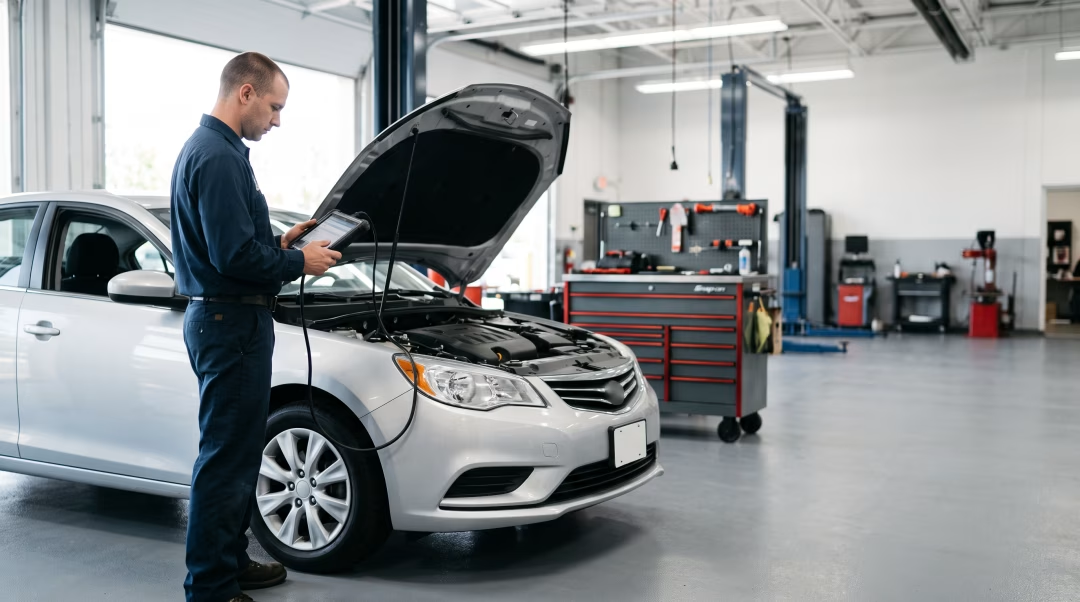
When you visit our service center for an engine diagnostic test, we follow a meticulous process to ensure accuracy. The first step is to connect our advanced OBD-II scanning tool to your vehicle's diagnostic port. This allows us to retrieve the specific DTCs that your car's computer has stored. However, a trouble code does not simply tell us which part to replace; it tells us which system is experiencing a fault. This is where the expertise of a trained technician becomes invaluable.
After retrieving the codes, our technician will analyze the data, consult manufacturer specific information, and perform a series of tests and visual inspections. This could involve checking wiring, inspecting vacuum hoses, testing sensors, or analyzing live data streams from the engine while it is running. This comprehensive approach allows us to confirm the root cause of the problem, preventing the unnecessary replacement of parts and saving you time and money. We believe in diagnosing the issue correctly the first time. We proudly serve drivers not only in Winston Salem but also in surrounding communities like Clemmons, Lewisville, and Kernersville.
Common Reasons Your Check Engine Light Is On
While hundreds of potential codes exist, some issues are far more common than others. Understanding these common culprits can help demystify the check engine light. Here are some of the frequent problems we identify during our diagnostic services:
- Faulty Oxygen (O2) Sensor: This sensor measures the amount of unburned oxygen in your exhaust system. A failing sensor can't provide the right data to the computer, leading to decreased fuel economy and increased emissions.
- Loose or Faulty Gas Cap: One of the simplest and most common causes. A loose or cracked gas cap can break the seal on the fuel system, causing fuel vapors to leak and triggering the light.
- Failing Catalytic Converter: This critical component of the exhaust system converts harmful carbon monoxide into less harmful emissions. If it fails, you may notice reduced performance and a rotten egg smell from the exhaust.
- Worn Spark Plugs or Ignition Coils: Spark plugs ignite the air and fuel mixture. Worn plugs or failing ignition coils can cause misfires, leading to poor performance, rough idling, and poor fuel efficiency.
- Mass Airflow (MAF) Sensor Issues: The MAF sensor tells the car's computer how much air is entering the engine. A faulty sensor can cause issues with stalling, jerking, and poor acceleration.
The Leader for Diagnostics in Winston Salem and Beyond
As a trusted part of the local automotive community, we are dedicated to providing top tier service to our neighbors throughout the Piedmont Triad. Our reputation is built on accurate diagnostics, quality repairs, and exceptional customer service. Whether you are driving a used truck through Forsyth County or a used SUV for family trips, our team has the knowledge to service a wide variety of makes and models. We understand that car trouble is disruptive, which is why we strive to make the diagnostic and repair process as smooth and transparent as possible. We provide clear explanations of our findings and present you with all available repair options before any work begins. This commitment to service extends to our customers from Greensboro, High Point, and beyond who trust us with their vehicle's care.
What is a DTC or diagnostic trouble code?
A Diagnostic Trouble Code (DTC) is a standardized alphanumeric code that your vehicle's onboard computer system generates and stores when it detects a malfunction. Each code corresponds to a specific issue or system, such as P0420 (Catalyst System Efficiency Below Threshold) or P0301 (Cylinder 1 Misfire Detected), which helps guide our technicians to the source of the problem.
How long does an engine diagnostic test take?
The initial part of the diagnostic process, which involves connecting our scanner and retrieving the codes, is quite fast, often taking just a few minutes. However, a complete and accurate diagnosis requires further investigation by a technician to pinpoint the exact cause. This can take anywhere from 30 minutes to a few hours, depending on the complexity of the issue.
Is it safe to drive my car with the check engine light on?
If the light is solid and the car seems to be driving normally, it is usually safe to continue driving to our service center for an inspection. However, if the light is flashing, it indicates a severe problem that could cause further damage. In this case, you should pull over safely as soon as possible and arrange to have your vehicle inspected.
Can a cheap code reader from an auto parts store do the same thing?
While a basic code reader can retrieve the DTC from your car's computer, it does not provide the whole story. These devices lack the advanced software and technician expertise needed to interpret the data correctly, test components, and analyze live engine information. A professional diagnostic service identifies the root cause, preventing you from wasting money on incorrect parts.
Will the check engine light turn off by itself?
In some rare cases, like a loose gas cap that has been tightened, the light may turn off after several driving cycles. However, for most issues, the light will remain on until the underlying problem is properly diagnosed and repaired. Ignoring the light can mask other potential problems and lead to more serious issues.
